















Bridge Over Fractured Waters: India’s Balancing Act

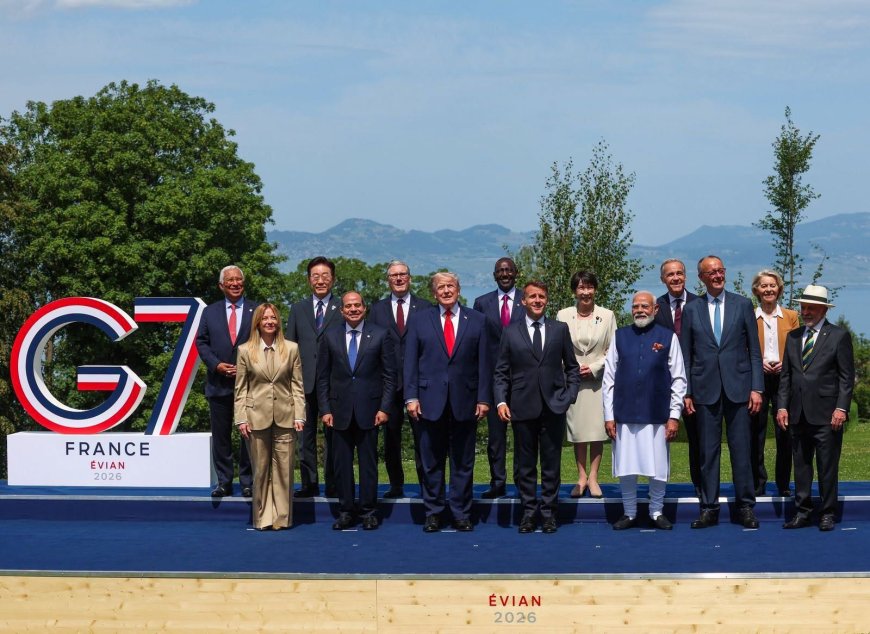
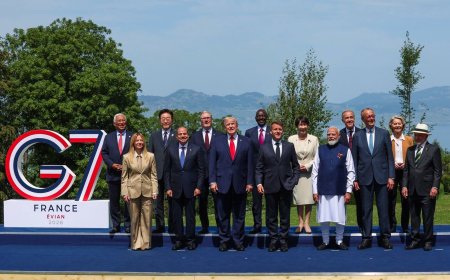
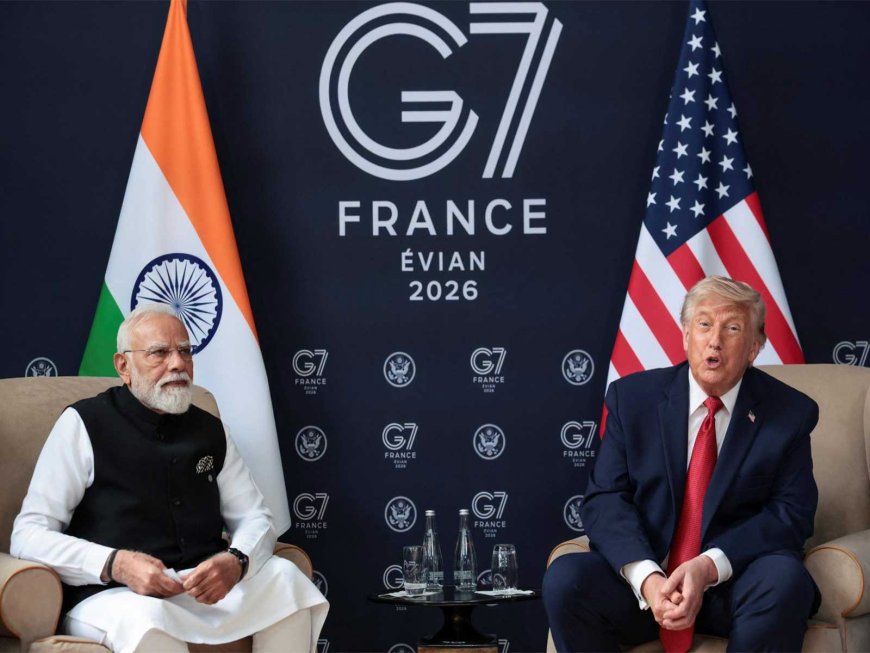
The 52nd G7 Summit, hosted by France in Évian-les-Bains from June 15-17, 2026, under the theme “Forging New Partnerships and Rebuilding International Solidarity,” provided India with a high-profile platform to amplify the concerns of the Global South while advancing its strategic, economic, and developmental priorities. Though not a formal member, Prime Minister Narendra Modi’s active participation in outreach sessions underscored India’s growing relevance in global governance. From New Delhi’s perspective, the summit yielded diplomatic gains, bilateral breakthroughs, and reinforced India’s role as an indispensable bridge between developed and developing nations.
Championing the Global South and Institutional Reform
India’s core intervention at the Outreach Session focused on addressing the global trust deficit, which Prime Minister Modi described as a bigger barrier than resource shortages. India advocated shifting from traditional donor-recipient models to equitable partnerships based on mutual respect, shared responsibility, and inclusive decision-making. This resonated with developing nations as India positioned itself as their voice, highlighting critical issues like energy security, food and fertilizer availability, financial resilience, and climate justice.
By emphasizing South-South cooperation, particularly India-Africa partnerships, New Delhi reinforced the diplomatic credentials established during its successful G20 Presidency. The summit allowed India to push for structural reforms in global institutions, demanding greater participation of middle-income countries in governance frameworks and more responsive development finance. These messages aligned with broader G7 discussions on balanced economic growth, critical minerals, and international partnerships, giving India vital leverage to influence global outcomes without holding a formal seat.
Bilateral Breakthroughs and Diplomatic Resets
One of the most tangible gains for India was a significant reset in India-Canada relations. After years of strain, both sides agreed to expedite negotiations for a Comprehensive Economic Partnership Agreement by the end of 2026, aiming to double bilateral trade by 2030. This builds upon a baseline where trade stood at USD 30.9 billion in 2024, with India as Canada’s seventh-largest partner. The leaders launched talks on a General Security of Information Agreement for defence and intelligence cooperation, announced "Raisina Americas" as a new dialogue platform, and advanced a nuclear energy partnership, including a significant uranium supply deal with Cameco. India also backed Canada’s bid for Dialogue Partner status in the Indian Ocean Rim Association, and Canadian Prime Minister Mark Carney invited Prime Minister Modi for an official visit later in the year.
Simultaneously, engagements with the UK reviewed progress under the India-UK Vision 2035, reaffirming commitments to an early Comprehensive Economic and Trade Agreement focusing on technology, defence, and education. Talks with the UAE emphasized maritime security in the Strait of Hormuz amid West Asian tensions, with Prime Minister Modi inviting the UAE President to the upcoming BRICS Summit that India will host. These targeted bilaterals highlight India’s pragmatic diplomacy, leveraging the G7 platform to mend ties, secure critical resources like uranium, and expand its global economic footprint.
Aligning Strategic Interests with Global Outcomes
The G7 delivered decisive outcomes on geopolitical issues, endorsing efforts in West Asia, reaffirming support for Ukraine, and addressing global imbalances, artificial intelligence governance, critical mineral supply chains, and health challenges like Ebola and cancer. India benefited indirectly through strong alignment on free and open Indo-Pacific principles, supply chain resilience, and technology cooperation supporting "China+1" investment strategies.
India’s participation helps de-risk global supply chains, attract international investments in manufacturing and technology, and shape global norms on artificial intelligence and digital public infrastructure, areas where India’s domestic experience, such as the Unified Payments Interface, adds proven value. Furthermore, the summit reinforced India’s role in energy transitions and climate action, consistent with its domestic development needs and its leadership in initiatives like the International Solar Alliance.
Navigating Multi-Alignment and the Path Forward
From New Delhi’s perspective, repeated G7 invitations affirm its rising power. India’s expanding economy, demographic dividend, strategic autonomy, and influence in the Global South make it indispensable. It uniquely bridges disparate forums like BRICS, the Quad, and the G20, offering the G7 access to diverse perspectives without full alignment on sensitive issues like unilateral sanctions or climate burden-sharing.
Challenges remain, as India is still an outreach partner rather than a member, limiting its deeper input, while divergences on trade and global reforms persist. Yet, the summit demonstrated mutual benefits, where the G7 gains legitimacy and India secures economic deals, technology access, and a louder global voice. Overall, the Évian Summit advanced India’s multi-alignment strategy, elevated Global South priorities, and positioned India as a key player in addressing twenty-first-century challenges. As global power diffuses, such platforms enable India to pursue its interests, targeting a Viksit Bharat by 2047, while contributing to a more inclusive world order.
What's Your Reaction?