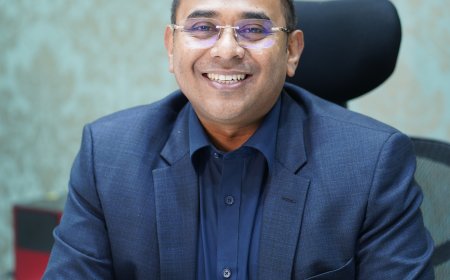

























Science Meets Soul: Sachin Rajvansh on Yoga, Body Alignment and the Future of Holistic Fitness


In an age where fitness trends are often driven by social media aesthetics rather than science, Sachin Rajvansh, the Founder of Divinity – The Thgird Eye stands out as a voice of balance, depth and authenticity. With a background rooted in commerce, strength training, nutrition, and advanced yogic sciences, Sachin seamlessly blends modern biomechanics with ancient yogic wisdom. In this candid conversation, he speaks about his journey, the science of body alignment, the mind–body connection, and why yoga needs to be simplified, not mystified.
Q1. Sachin, let’s begin with your journey. How did fitness and yoga become your life’s path?
A: My journey has been very organic. From the beginning, I was inclined towards sports and physical fitness. I completed my schooling in Dehradun, Uttarakhand, and later pursued B.Com (Honours). But alongside academics, fitness always stayed with me. I began with professional certifications in strength training, hypertrophy (muscle growth) and fitness nutrition from the Himalayan Stallion Academy founded by Jeet Selal in December 2016 in Melbourne. That phase helped me understand the physical and nutritional aspects of the human body in depth.
Q2. When did yoga enter the picture, and how did it change your perspective?
A: Yoga entered my life when I decided to go deeper—beyond muscles and appearance. I pursued a Master’s in Human Consciousness and Yogic Science, and that’s when my entire outlook shifted. In my second year itself, yoga became a daily practice. I realized yoga is not just about asanas; it’s about alignment, awareness, and balance between body, mind and emotions.
Q3. “Body alignment.” Why is it so crucial?
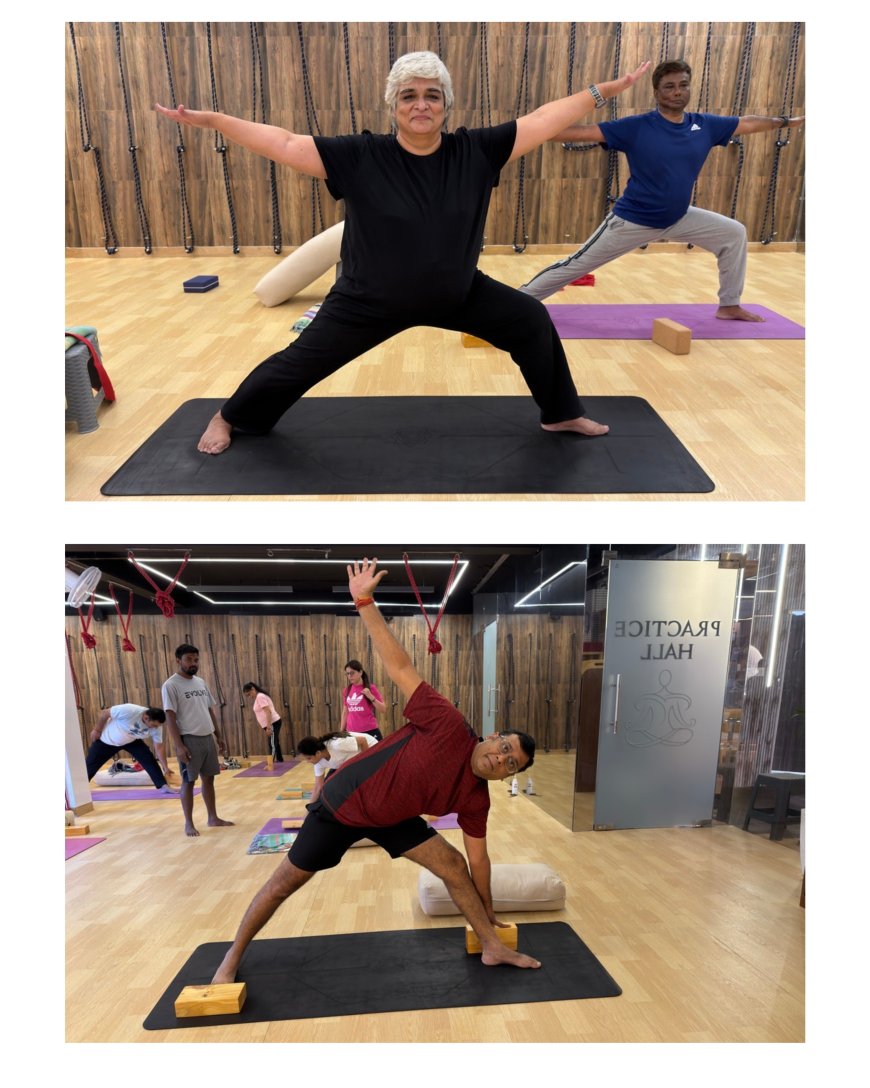
A: Body alignment is fundamental. Many physical problems—like knee pain, lower back pain, flat foot or nerve compression—are not because of injury but because of incorrect alignment over years. Through biomechanics and yogic understanding, we can diagnose and correct these issues. When alignment improves, pain reduces naturally. Yoga, when done scientifically, is extremely powerful in this regard.
Q4. You’ve trained under several gurus. How important was that guidance?
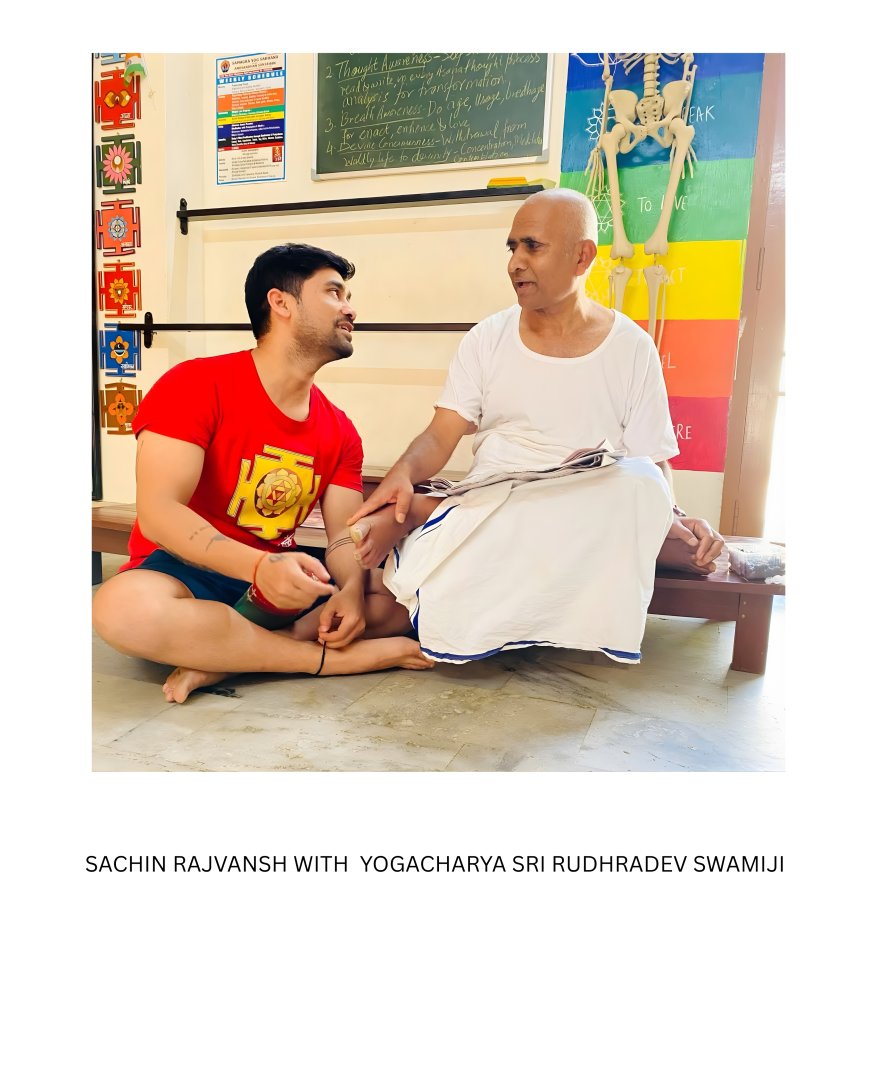
A: Very important. I was fortunate to learn from gurus like Swami Rudradev ji and Sudhakar ji. While staying in Bengaluru and Mangalore, I interacted with multiple teachers and researchers. Their guidance helped me understand that yoga is experiential and scientific—not belief-based. Gurus don’t just teach techniques; they shape your way of thinking.
Q5. How do emotions and mental stress reflect in the body?
A: The connection is very deep. For example, if the diaphragm is restricted, it impacts breathing and emotional stability. Emotional stress often manifests as physical stiffness. Practices like backbending, breathwork and alignment-based yoga help release emotional blockages. This is not philosophy—it’s backed by anatomy and biomechanics.

Q6. You often say yoga should be kept simple. Why?
A: Because complexity scares people away. Yoga was never meant to be complicated. If you look at Patanjali’s Yoga Sutras—Yama, Niyama, Asana, Pranayama, Pratyahara, Dharana, Dhyana and Samadhi—it’s a step-by-step system. First, discipline the body through asana. When the body becomes stable, breath becomes stable, and only then can meditation happen. Without physical stability, mental stability is impossible.
Q7. What’s your take on the current fitness industry and social media influence?
A: Honestly, it’s worrying. Many people start exercising just by watching reels or videos. Without understanding human anatomy, theory and practical experience, this can be dangerous. A good trainer must have proper certification, research exposure, and real-world practice—not just a good Instagram profile.
Q8. How important is nutrition in fitness and yoga?
A: Nutrition is non-negotiable. Strength gain, muscle gain and fat loss all require different nutritional approaches. Ideally, a healthy fat percentage lies between 10–15%, depending on the individual. Calorie deficit alone doesn’t work—you need nutrient-dense food. Fitness is a triangle of training, nutrition and recovery.
Q9. What do certifications really mean in this field?
A: Certification is not just a piece of paper. A genuine certification includes theory, practical training, research work and exams. It builds credibility and competence. Anyone can claim to be a trainer, but structured education separates professionals from amateurs.
Q10. What about yoga and fitness for children?
A: Children should never be pushed into intense workouts or advanced yoga. They naturally have movements that help in them staying on the right track. At a young age, the focus should be on relaxation, correct movement patterns and posture correction. Today, kids carry heavy school bags and follow poor lifestyles, which affects their spine early. Gentle yoga and alignment-based movement are ideal.
Q11. How quickly can one experience benefits from yoga?
A: Very quickly, if done right. Within 10–15 days, people notice improved sleep, reduced stiffness and better mental clarity. Yoga works slowly but deeply—it doesn’t shock the body, it heals it.
Q12. Finally, what message would you like to give to today’s youth?
A: Don’t get influenced by social media bodies or fancy poses. Before following any trainer or method, check their education, experience and understanding. Read, learn, question and then practice. Right knowledge leads to right health. Yoga and fitness are lifelong journeys—approach them with patience and awareness.
What's Your Reaction?