




















AfD shakes up German Politics
AfD shakes up German Politics

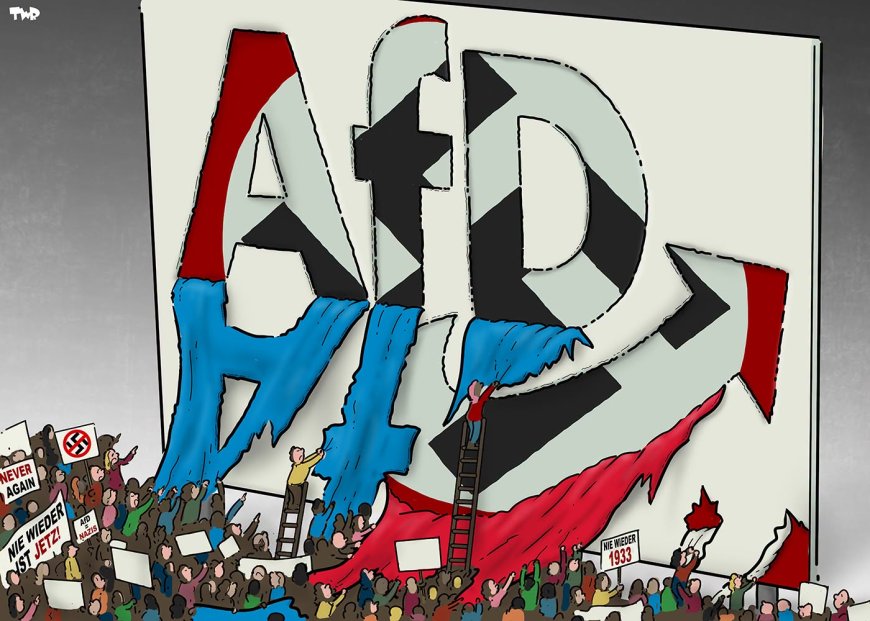
Germany's political landscape shifted dramatically, when the far-right Alternative for Germany (AfD) topped a state election for the first time in the party's history — and did so by a wide margin. In Saxony-Anhalt, the AfD pulled in 43.8% of the vote, nearly doubling its 2021 total of 20.8%. It's the strongest showing by a far-right party in a German regional election since World War II, and it left the party just three seats shy of an outright majority in the 83-seat state parliament.
The real story, though, might be the collapse on the other side of the aisle. The CDU, which had run Saxony-Anhalt for more than twenty years, saw its support crater from 37.1% to just 17.2% — a defeat so steep that Chancellor Friedrich Merz called it a shock that shakes his party "to its very foundations." The SPD, Greens, and Die Linke all landed in single digits, each picking up eight seats, while the Sahra Wagenknecht Alliance (BSW) scraped in with 5.3%. The FDP didn't clear the 5% threshold at all and now has no seats in the state.
Turnout tells its own story: 77.8%, a huge jump from around 60% five years ago. People showed up — and in the AfD's case, that turnout translated into total dominance of the direct races, with the party winning 38 of 41 constituency seats outright. The CDU didn't win a single one.
At the center of it all is 35-year-old Ulrich Siegmund, the AfD's lead candidate in the state, who told supporters in Magdeburg, "We have made history... we are going to get our country back, and we are starting with Saxony-Anhalt." He's signaled he wants to govern with a real majority rather than settle for a minority government, and party co-leaders Alice Weidel and Tino Chrupalla flew in to join the celebration, with Weidel calling the result "sensational."
Now comes the hard part: actually forming a government. Germany's mainstream parties have long upheld a so-called "firewall" refusing to cooperate with the AfD, whose state branch is officially classified as right-wing extremist by Saxony-Anhalt's domestic intelligence service. That leaves the math awkward — the AfD plus the BSW would total 44 seats, exactly matching what everyone else combined could muster if they banded together. Siegmund says he's open to peeling off individual lawmakers willing to work with him on migration and security, but as of mid-September, no government has been formed, and outgoing Minister-President Sven Schulze remains in a caretaker role.
Merz, for his part, has ruled out any AfD cooperation and has already sparred with Weidel in the Bundestag over the party's "remigration" platform — its push for large-scale deportations. Reaction abroad was mixed: French officials called the result "a very worrying signal," while some international figures welcomed the AfD's rise.
Analysts are pointing to a familiar mix of causes — economic anxiety, migration concerns, and a broader sense of alienation from national politics that's been building in the former East for years. Notably, the AfD didn't just win over previous non-voters; it also pulled a significant chunk of former CDU supporters.
This is only the first of three state elections in Germany this autumn — Berlin and Mecklenburg-Vorpommern vote later in the month — and Saxony-Anhalt's result is likely to set the tone for how those campaigns play out, and for how hard the pressure grows on Germany's traditional parties to respond.
What's Your Reaction?