







Delhi Diplomacy: India and Russia Reinforce a Time-Tested Bond
Delhi Diplomacy: India and Russia Reinforce a Time-Tested Bond

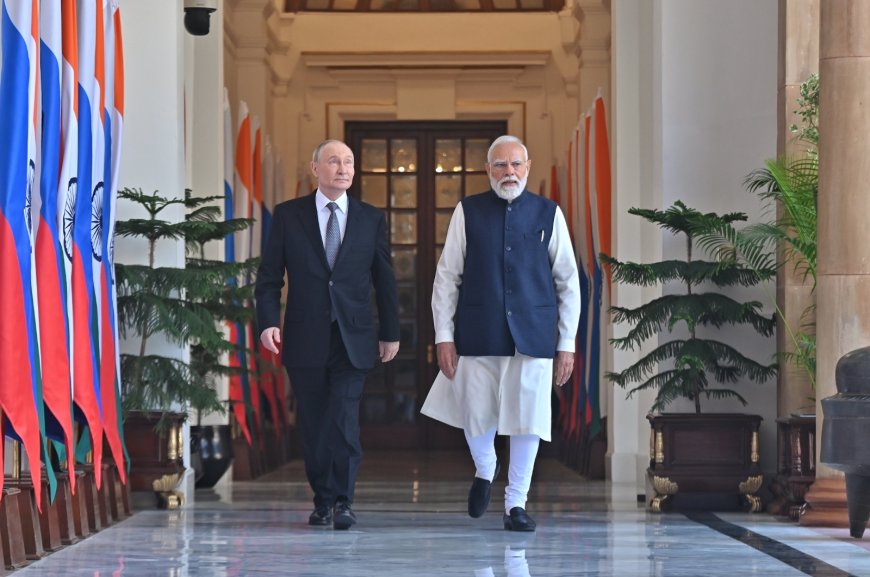
New Delhi: Russian President Vladimir Putin’s state visit to India for the 23rd India-Russia Annual Summit reaffirmed the durability of one of the world’s most resilient strategic partnerships. Held in New Delhi, the summit unfolded at a moment of geopolitical strain—U.S. tariff threats targeting Indian exports, Western sanctions tightening around Russia, and the continuing conflict in Ukraine. Yet the two nations demonstrated that their bilateral engagement remains largely insulated from external pressures, achieving substantive outcomes in defence, energy, trade, and diplomacy that reinforced India’s pursuit of strategic autonomy in an increasingly multipolar world.
Warm Gestures and Strategic Signalling
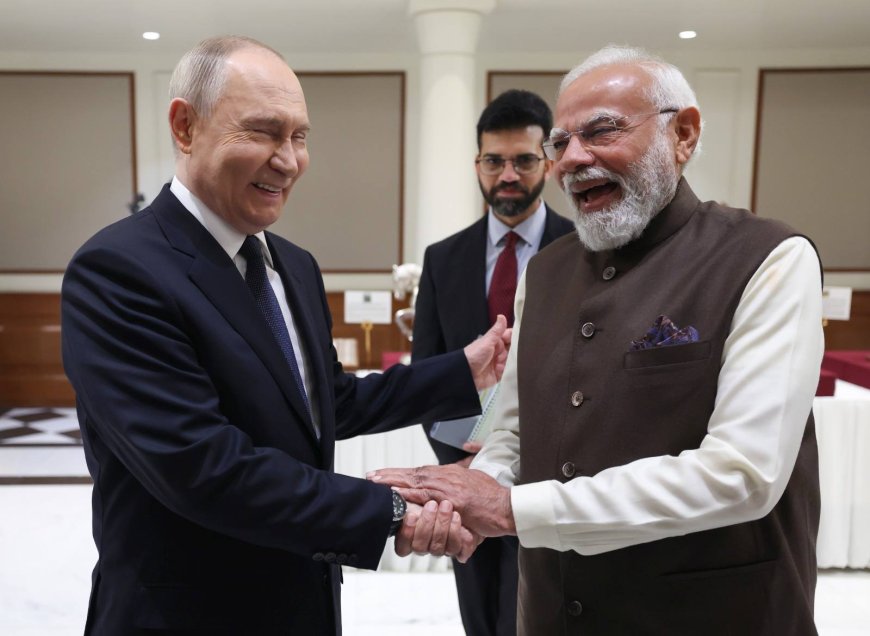
Putin’s arrival set the tone for a visit marked by both symbolism and strategic clarity. He received a ceremonial welcome at Rashtrapati Bhavan, complete with a tri-services guard of honour and a reception led by Prime Minister, Narendra Modi. Putin paid homage at Rajghat, laying a wreath at the memorial of Mahatma Gandhi and signing the visitors’ book—gestures underscoring the historical depth of India-Russia ties.
Prime Minister Narendra Modi hosted a private dinner the same evening, creating an atmosphere conducive to candid dialogue. The second day featured bilateral talks at Hyderabad House, a joint press interaction, Putin’s address at the India-Russia Business Forum, and a state banquet hosted by President Droupadi Murmu.
The banquet offered a notable glimpse into the personal camaraderie between the two leaders, who sat together during the cultural programme. Modi presented Putin with thoughtfully curated gifts, including a Russian-translated Srimad Bhagavad Gita, premium Assam black tea, Kashmiri saffron, an ornate silver tea set, a silver horse figurine, and a marble chess set—symbolizing a blend of respect, artistry, and diplomacy.
Trade Roadmap to 2030
Economic cooperation—long a stabilizing force in bilateral relations—assumed central focus during the summit. Bilateral trade reached an unprecedented $68.7 billion in FY 2024–25, driven primarily by discounted Russian oil supplies that helped cushion India against global energy volatility.
To steer future economic engagement, the leaders adopted the Programme for the Development of Strategic Areas of Russian-Indian Economic Cooperation until 2030, an ambitious roadmap aimed at elevating trade to $100 billion by the end of the decade. The effort focuses on diversification and correcting imbalances by encouraging Indian exports in pharmaceuticals, agriculture, IT services, automotive components, electric mobility, and advanced materials.
Russia expanded opportunities for Indian investment in its Far East and Arctic regions, especially in energy, mining, and maritime logistics. Both sides also pushed for early conclusion of the preferential trade agreement with the Eurasian Economic Union (EAEU), which would reduce tariffs and bolster connectivity via the International North-South Transport Corridor. Importantly, 96% of bilateral transactions now occur in national currencies, shielding ties from external financial disruptions.
Energy Assurances and Civil Nuclear Gains
Energy security remained a foundational pillar. Putin assured India of uninterrupted supplies of oil, gas, coal, and other critical fuels—particularly vital amid attempts by Western capitals to discourage India’s energy links with Russia.
Civil nuclear cooperation advanced significantly, with commitments to expedite the full-capacity expansion of the Kudankulam Nuclear Power Plant. Prospects for small modular reactors, floating nuclear plants, and non-energy nuclear applications in medicine and agriculture were also explored, reflecting a shared push toward scalable, sustainable energy solutions.
Defence Partnership Reinforced
Long-standing defence cooperation received a renewed boost. India secured expedited delivery of the remaining two S-400 air defence systems and agreed on upgrades to its Su-30MKI fighter fleet. Discussions on joint development of futuristic platforms like the Su-57 stealth fighter, alongside shipbuilding partnerships under “Make in India,” highlighted the drive toward modernized co-production.
Existing manufacturing ventures—AK-203 rifles in Amethi and BrahMos missiles—were reaffirmed as models of successful joint production. New agreements covered technology transfers, critical minerals, spares, and logistics support, strengthening India's defence preparedness and reducing vulnerability to Western sanctions.
Shared Positions on Global Issues
Diplomatically, Modi and Putin reiterated a “zero-tolerance” stance on terrorism and pledged deeper coordination across the UN, G20, BRICS, and SCO. On the Ukraine conflict, Modi restated India's stance: “not neutral, but on the side of peace,” emphasizing dialogue. Putin, meanwhile, criticized U.S. “hectoring” over Indo-Russian trade and praised India’s independent foreign policy choices.
The unveiling of India-Russia Vision 2030 set the stage for collaboration in AI, green energy, space, and high-tech innovation. People-centric initiatives included free 30-day e-visas for Russians, new Indian consulates in Russia, and enhanced cultural exchanges.
A Partnership Poised for the Future
The summit carries wider global implications. For Russia, facing isolation since the 2022 Ukraine invasion, the visit provides economic stability and diplomatic credibility in Asia. For India, it acts as a counterweight to U.S. tariff threats while helping maintain equilibrium among partnerships from QUAD to BRICS.
What's Your Reaction?