










Ma Aabar Ashben: City Says Durga Durga
Ma Aabar Ashben: City Says Durga Durga

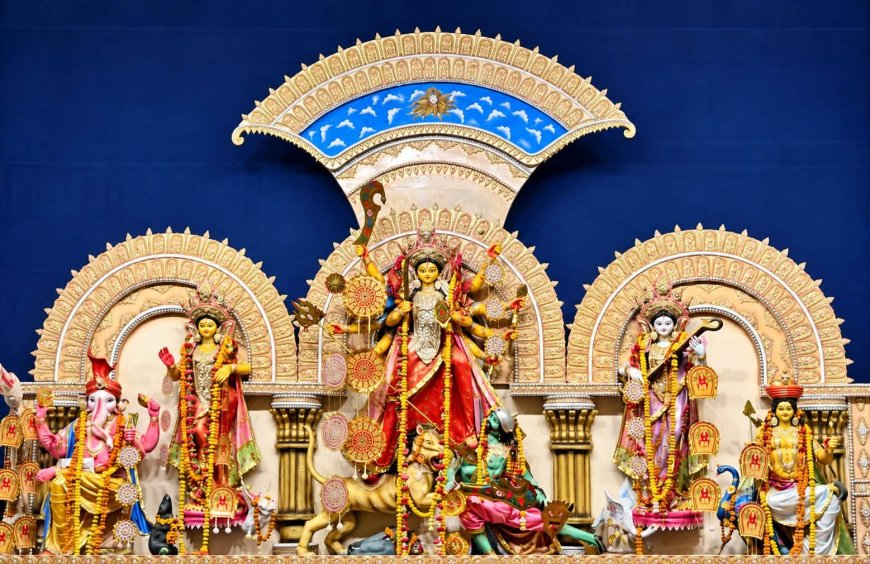
Long before you spot the pandal, you hear it. The dhak comes first, a deep, rolling beat from drummers who have travelled from Malda, and then the conch shells join in. By the evening of Shashthi, October 16, Lucknow had changed its tune.
More than 250 organised pujas now light up the city, from Aliganj and Jankipuram to Gomti Nagar, Rabindra Palli, Model House, Badshahnagar and Sahara States. Families in dhoti-kurtas and red-bordered sarees move from pandal to pandal. Many of them are not Bengali, and they come anyway.
A tribute to the Mahanayak
The Bengali Club & Youngmen’s Association, one of the city’s oldest organisers held its 112th Durga Puja from October 16 to 20, with Visarjan on October 21. This year’s theme marked the birth centenary of Uttam Kumar, the Bengali screen legend known as the Mahanayak. Installations and cut-outs recalled his films, and songs from his movies play across the grounds.
The ritual side is just as carefully kept. The pre-dawn Chandi Path (Mahishasura Mardini), a tradition at the club since 1964, opened the festival on October 16. The Kolkata cultural team PALAK has staged Bengali music and dance, and a shehnai recital on October 18 brought in Lucknow’s own Ganga-Jamuni tehzeeb. On Maha Navami, the Dhunuchi dance, with burning incense in clay burners and swaying dancers, drew some of the biggest crowds.
The big build in Jankipuram
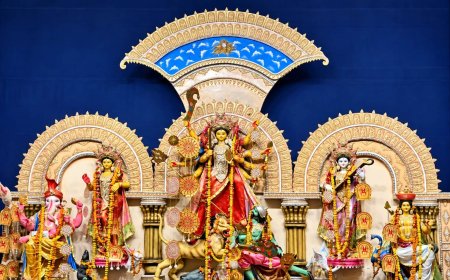
The city’s largest spectacle is the Utsav Durga Puja at Durga Park in Jankipuram’s Sector E, now in its 32nd year. The committee built a towering Ram Mandir-themed pandal, about 110 feet in height, width and depth. Fifty-four artisans from West Bengal spent nearly three months on it, using around 20,000 bamboo poles. Inside stands an 18-foot eco-friendly idol of Maa Durga.
One city, many pandals
Smaller pandals have their own stories. La Touche Road (Hewett Road), in its 85th edition, rebuilt the courtyard of a traditional Bengali bonedi bari mansion. Rabindra Palli went rural with a Bengal village theme, another 18-foot eco-friendly idol, and “Rongeen,” an evening of Tagore songs by a 25-member dance troupe. Model House Park took its design from Akshardham, Sahara States chose Bengali folk art and village motifs, and Vikas Nagar recreated the Dakshineswar Kali Temple.
Much of this work comes from migrant artisans from West Bengal. They arrive months ahead, and for a few weeks the city becomes an open-air gallery of their craft.
Devotion with a quiet centre
For those who prefer prayer to pageantry, the Ramakrishna Math in Nirala Nagar held its six-day Shri Shri Durga Puja Mahotsav from October 16 to 21. It followed Vedic rituals, with Chandi Path and spiritual discourses. Highlights included Bodhan with nine sacred plants and Kumari Puja on October 19, along with classical music by artistes from across the country. Community feasts and prasad were open to all, and the puja is live-streamed for those who cannot attend.
Swami Muktinathananda described the Goddess as a living presence of love, service and compassion.
Food, music and malls
Between pandals come the food stalls, serving Bengali bhog and street favourites. The evenings run to Rabindra Sangeet, dance dramas on Mahishasura Mardini and, because this is Lucknow, a few Bollywood classics and dandiya nights.
The festival has reached the city’s malls too. Phoenix Palassio had its own 10-day Durga Pujo from October 11 to 20, with dhak, Dhunuchi dance, Mayurbhanj Chhau, Baul music and a Bengali live band. Retail director Sanjeev Sarin of The Phoenix Mills Limited said the aim was to give visitors “a cultural experience that goes beyond shopping.”
The goodbye
By Dashami, the mood shifts. Processions form, the drums turn slower and more emotional, and Maa Durga’s idols are carried towards immersion. For many in Lucknow, this is the hardest moment of the festival, because it ends a few days that felt like a homecoming.
What stands out in Lucknow’s 2026 puja is the balance. There is big spectacle in Jankipuram, a film tribute at the Bengali Club, quiet worship at the Math, and the warmth of neighbourhood pandals. Together they make a small Bengal in the heart of Awadh, held up by organisers, artisans and devotees of every background.
What's Your Reaction?