

















Lucknow's Rise of the Machines moment is here
Lucknow's Rise of the Machines moment is here

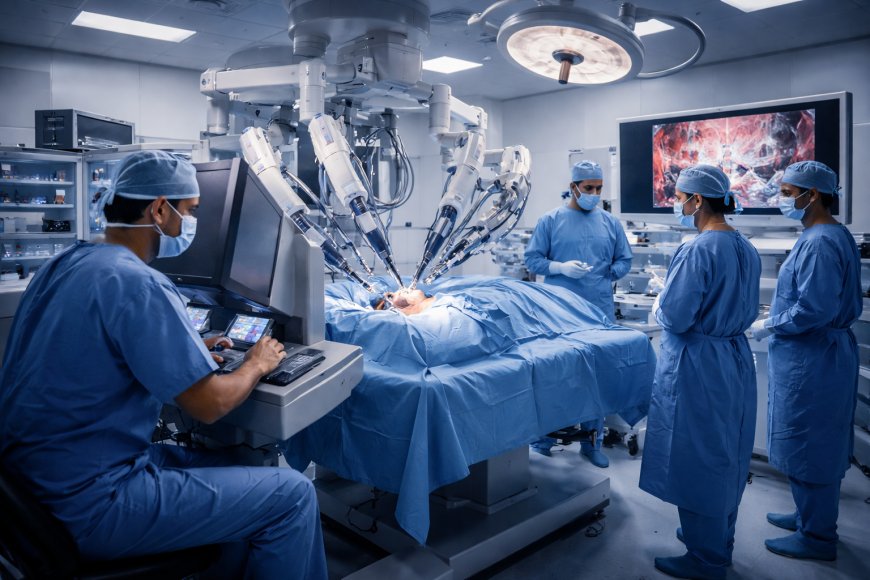
Lucknow: Robotics is rapidly transforming healthcare in Lucknow, reshaping the city from a traditional medical hub into a center for precision-driven, technology-enabled treatment. Over the past three years, particularly between 2023 and 2026, the adoption of robotic surgical systems has accelerated across both private and government hospitals. What was once considered an elite, metro-centric facility is now becoming increasingly mainstream in Uttar Pradesh’s capital, offering patients safer procedures, quicker recovery, and improved outcomes.
From complex cancer surgeries to joint replacements and even trauma care, robotics is redefining how surgeons operate and how patients heal. The shift signals not only medical advancement but also a broader transformation in access, affordability, and healthcare equity.
The Rise of Robotic Surgery in the City
Major private institutions such as Medanta Lucknow, Apollomedics Super Speciality Hospitals, Max Super Speciality Hospital Lucknow, Chandan Hospital and Health City Vistaar have invested significantly in robotic platforms. At the same time, premier government institutions including Ram Manohar Lohia Institute of Medical Sciences, King George's Medical University and Sanjay Gandhi Postgraduate Institute of Medical Sciences have adopted similar systems, democratizing access to advanced surgical care.
The core driver behind this transformation is the da Vinci Xi Surgical System, developed by Intuitive Surgical. The system enables surgeons to operate through tiny incisions using articulated, wristed instruments controlled from a console. It provides high-definition 3D visualization, tremor filtration, and exceptional dexterity, translating a surgeon’s hand movements into precise micro-motions inside the patient’s body.
This technological interface does not replace the surgeon; rather, it enhances human capability. It allows for greater accuracy in delicate procedures, especially in confined anatomical spaces.
Apollo and the Push for Minimally Invasive Excellence
At Apollomedics, the introduction of the da Vinci Xi marked a milestone for the region. The hospital described it as one of the first installations in Lucknow, positioning robotic surgery as a defining step in elevating standards of care.
Hospital officials emphasize that robotic-assisted procedures in urology, gynecology, general surgery, and oncology result in smaller incisions, reduced blood loss, and faster recovery. Patients undergoing robotic prostate surgery, hysterectomy, or gastrointestinal procedures are often discharged earlier compared to traditional open surgeries.
“This cutting-edge technology allows for minimally invasive surgeries with greater precision, faster recovery times, and improved patient outcomes,” the hospital has stated, underscoring its commitment to global standards of care within the city.
Medanta’s Breakthrough in Robotic Trauma Care
If Apollo signaled arrival, Medanta demonstrated expansion of possibilities. In August 2025, Medanta Lucknow performed what was widely reported as India’s first robotic-assisted trauma surgery. A 45-year-old road accident victim with critical internal injuries underwent a complex vascular repair using robotic assistance after stabilization.
The surgical team, led by Dr. Sandeep Verma, Director of GI Surgery, chose robotics over conventional minimally invasive techniques due to its superior dexterity. “While other minimally invasive options were available, we chose robotics because of its superior precision and dexterity,” Dr. Verma noted.
Traditionally, robotic surgery has been associated with elective procedures such as cancer or urological operations. The Medanta case illustrated that robotics could extend into emergency trauma care, where precision and reduced surgical trauma can mean the difference between life and death.
The case marked a turning point, expanding the narrative around robotics from luxury innovation to life-saving intervention.
Government Hospitals Expand Access
While private hospitals introduced robotics to Lucknow, government institutions have played a crucial role in making it accessible to a wider population.
At RMLIMS, more than 300 robotic surgeries were performed within just 11 months by early 2026. Of these, urology and renal transplant procedures accounted for the majority, followed by gastro and oncological surgeries. Director Prof. C. M. Singh described the milestone as a reflection of the institute’s focus on innovation, patient safety, and modern technology.
Head of Urology Prof. Ishwar Ram Dhayal highlighted the impact particularly in complex urological and transplant cases. “Robotic surgery improved precision and outcomes, especially in complex urological and renal transplant cases,” he said, adding that the institute plans to expand robotic services into additional specialties.
Meanwhile, KGMU’s entry into robotic surgery in 2025 was particularly significant. As one of the most historic medical institutions in northern India, its adoption signaled a systemic shift rather than an isolated experiment. In February 2026, KGMU introduced the da Vinci system under a public-private partnership model, offering procedures at nearly half the cost compared to private hospitals. Surgeries that could cost ₹1.5 lakh or more in private facilities were offered for around ₹70,000.
By combining subsidized pricing with advanced technology, KGMU is attempting to bridge the affordability gap that has traditionally limited robotic surgery to affluent patients.
Indigenous Innovation and the ‘Made-in-India’ Push
Beyond imported systems like da Vinci, indigenous innovation is emerging as a parallel force. KGMU has incorporated the SSI Mantra, a Made-in-India robotic platform designed to reduce dependence on expensive foreign systems.
In January 2026, the MantraM Surgical Robot Yatra led by SS Innovations International brought the Mantra 3.0 platform to Lucknow. Demonstrations and hands-on workshops were conducted for over 100 healthcare professionals across Uttar Pradesh, highlighting efforts to train surgeons and scale adoption in Tier-2 and Tier-3 cities.
Indigenous systems promise lower capital investment, reduced maintenance costs, and more flexible financing models—factors crucial for public hospitals and smaller private institutions.
Orthopedic Robotics: Precision in Motion
Robotics in Lucknow is not confined to abdominal or cancer surgery. Orthopedics has seen significant integration of robotic platforms.
Apollomedics introduced AI-powered robotic knee replacement technology, promoting it as among the world’s most advanced for precision alignment. Health City Vistaar adopted the Smith+Nephew CORI Surgical System in 2025, enabling highly accurate joint resurfacing and replacement.
Robotic orthopedics ensures better implant positioning, reduced bone trauma, and faster rehabilitation. For elderly patients or those requiring bilateral knee replacements, these advantages can dramatically improve quality of life.
Chandan Hospital, meanwhile, integrated multiple robotic systems including CMR, Stryker, and da Vinci platforms, positioning itself at the forefront of what it terms the “robotics revolution.”
Clinical Benefits and Patient Outcomes
The most tangible impact of robotics lies in patient experience. Smaller incisions translate into less postoperative pain and minimal scarring. Reduced blood loss lowers transfusion requirements. Precision minimizes damage to surrounding healthy tissue, which is particularly critical in oncology.
In cancer surgery, robotic systems enable surgeons to remove tumors while preserving vital nerves and organs. In prostate or gynecologic cancers, this can mean better long-term functional outcomes. In renal transplants, robotic assistance enhances suturing precision in vascular connections.
Shorter hospital stays reduce infection risk and cut overall treatment costs in the long run. Patients often return to normal activities more quickly, reducing productivity loss and emotional strain.
Challenges and the Road Ahead
Despite rapid growth, challenges remain. The da Vinci system and similar platforms cost several crores of rupees, making capital investment substantial. Training surgeons and operating room staff requires time and structured programs. Insurance coverage for robotic procedures is still inconsistent, sometimes deterring patients.
However, government support, public-private partnerships, and indigenous alternatives like Mantra are gradually lowering barriers. SGPGIMS is reportedly planning significant investments in robotic systems for cancer treatment, reinforcing Lucknow’s trajectory as a regional innovation hub.
A Defining Moment for Healthcare in Northern India
Robotics in Lucknow represents more than technological adoption—it marks a cultural shift in healthcare delivery. The city is aligning global innovation with local needs, combining elite private expertise with public accessibility.
By integrating robotics across trauma, oncology, orthopedics, urology, gynecology, and transplant surgery, Lucknow is building a healthcare ecosystem that is both advanced and inclusive. The transformation reduces urban-rural disparities, attracts skilled professionals, and positions the city as a leader in northern India’s medical landscape.
As surgeons sit at robotic consoles translating their expertise into microscopic precision, one truth becomes clear: technology is not replacing human skill—it is amplifying it. In doing so, Lucknow is entering a new era of medicine where innovation and compassion converge, ensuring safer surgeries, faster healing, and a higher standard of care for thousands of patients each year.
What's Your Reaction?