















Kashi’s Floral Waste Finds New Life
Kashi’s Floral Waste Finds New Life

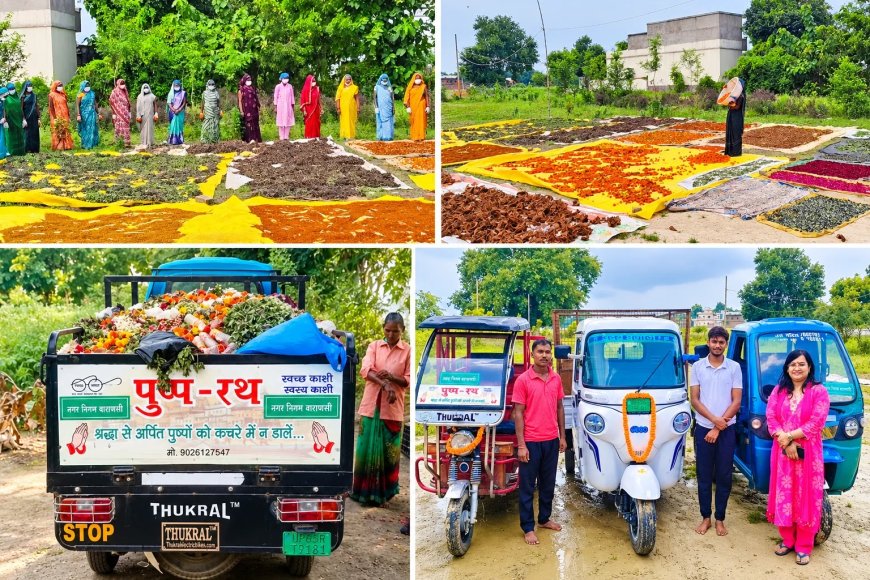
Flowers offered at temples in Kashi are finding a new purpose, with discarded petals and leaves being transformed into incense sticks, dhoop, havan materials and other useful products. The initiative is combining environmental protection with women’s empowerment, turning religious waste into a source of livelihood for dozens of women.
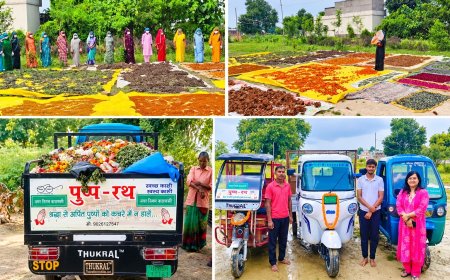
Led by Komal Singh’s organisation, Easy Help, the initiative collects around 1,000 kilograms of floral waste daily from approximately 110 temples across Varanasi. The flowers are recycled into products, helping improve the management of temple waste and reduce the risk of pollution in rivers such as the Ganga and Varuna.
Singh said the initiative began with just 10 temples and has gradually expanded. After completing her MBA, she returned to Varanasi and identified the environmental challenges posed by flowers and other offerings discarded at religious sites. Working in coordination with the municipal corporation, Easy Help began collecting floral waste for recycling.
Three electric rickshaws, called ‘Pushp-Raths’, are used to transport the collected flowers from temples to processing facilities.
The flowers undergo several stages before being converted into finished products. They are sorted according to quality, naturally dried without chemicals and ground into powder. This raw material is then used to manufacture incense sticks, dhoop, dry-stick incense, herbal gulal and edible tulsi powder.
The organisation is also exploring ways to utilise the floral waste that cannot be used for incense production. According to Singh, around 40 to 50 per cent of the collected flowers are currently unsuitable for making incense and dhoop. These materials are being stored separately, with plans to process them into organic compost in the future. The objective is to maximise the use of temple waste and minimise its environmental impact.
Women’s empowerment is another key aspect of the project. The initiative provides direct and indirect employment to approximately 70 to 80 women, each earning between ₹8,000 and ₹10,000 per month. The programme offers livelihood opportunities while encouraging women to become financially independent.
Varanasi Municipal Commissioner Himanshu Nagpal said the initiative creates a meaningful link between religious faith, environmental conservation and women’s empowerment. It also offers a practical approach to managing waste generated at religious places while creating employment.
What's Your Reaction?